
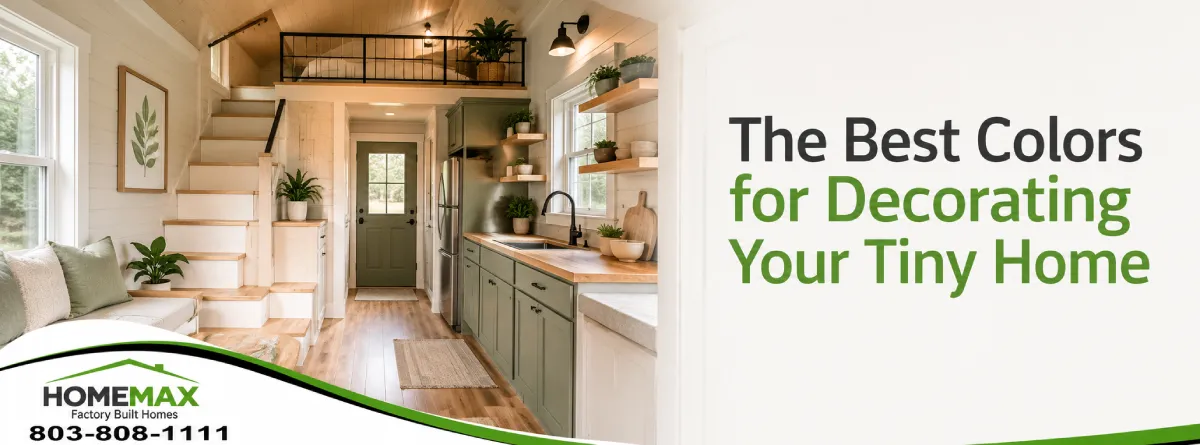
The Best Colors for Decorating Your Tiny Home
Quick Answer: The best tiny home decorating colors are light neutrals, soft earth tones, warm whites, pale grays, muted greens, and small touches of deeper accent color. These shades can help a compact home feel brighter, calmer, and more open without making the space look plain.
Color matters more in a tiny home because every wall, cabinet, floor, curtain, and piece of furniture is close together. A color that feels cozy in a large room can feel heavy in a smaller layout. If you are comparing tiny homes in Lexington, SC or looking at compact layouts near Columbia, it helps to think about color before you start buying furniture or decor.
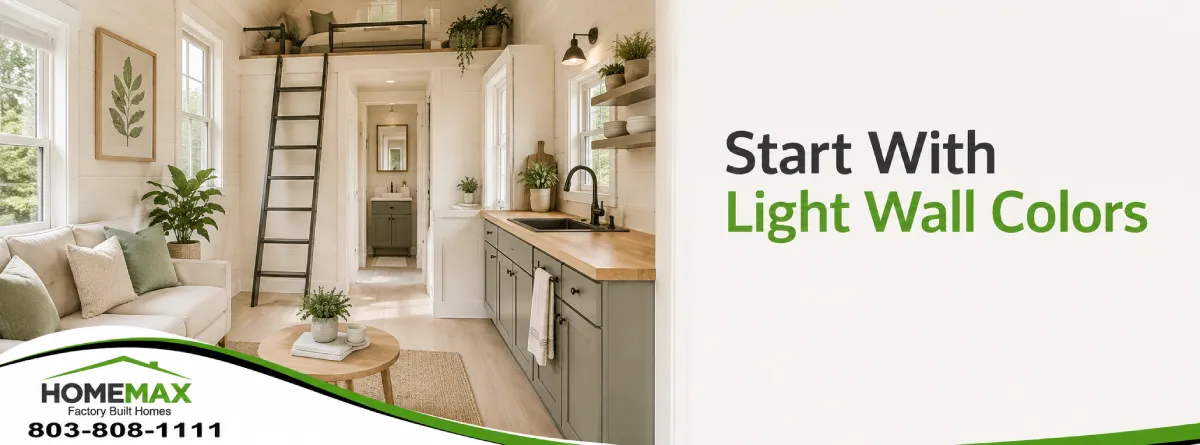
Start With Light Wall Colors
Light wall colors are usually the safest starting point in a tiny home. Warm white, soft cream, pale beige, and light greige can make rooms feel cleaner and less crowded. These colors also give you more flexibility with furniture, rugs, curtains, and seasonal decor.
Pure bright white can work, but it may feel cold if the home has limited natural light. A slightly warm white often feels more comfortable, especially in a small living room, bedroom, or kitchen. The goal is not to make everything white, it is to create a simple background that lets the rest of the home breathe./p> h4>strong>Use Accent Colors Carefully/strong>/h4> Accent colors can bring character, but they work best in small amounts. A muted green, dusty blue, clay, charcoal, or deep brown can look great on pillows, a small cabinet, bedding, wall art, or a single furniture piece. In a tiny home, one strong color usually goes farther than people expect.
If you like darker colors, try using them below eye level or in smaller details. A dark throw blanket, matte black hardware, navy pillows, or a stained wood table can create contrast without closing in the room. This is especially helpful when comparing tiny homes with open living and kitchen areas.
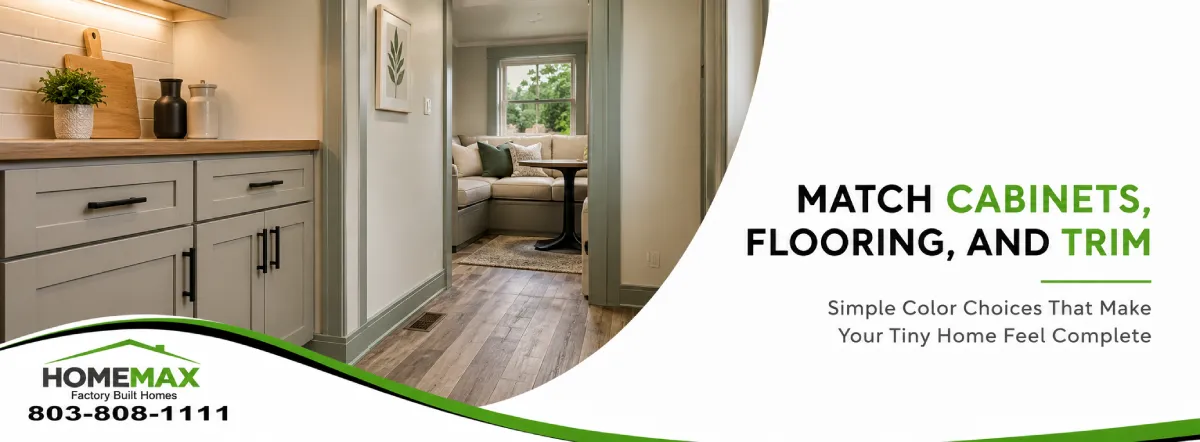
Match Cabinets, Flooring, and Trim
Walls are only one part of the color plan. Cabinets, flooring, countertops, trim, and doors all affect how the home feels. Light cabinets with medium wood flooring can feel warm and open. White trim with soft gray walls can feel clean and simple. Natural wood accents can keep a tiny home from feeling too plain.
When touring model homes or reviewing manufactured homes for sale in South Carolina, pay attention to how finishes work together. A color that looks good by itself may not work as well next to the floor, cabinets, or countertops.
Why This Matters
In a tiny home, color affects more than style. It can change how wide a hallway feels, how bright a kitchen looks, how calm a bedroom feels, and how organized the whole home appears. Good color choices can make a compact floor plan feel more comfortable for everyday living.
Common Mistakes
- Using too many strong colors in one open space.
- Choosing dark wall colors before seeing how much natural light the home gets.
- Ignoring flooring, cabinet, and trim colors when buying furniture or decor.
Best Practices
- Choose one main wall color and repeat it throughout most of the home.
- Use accent colors in decor, bedding, rugs, and small furniture pieces.
- Bring color samples when comparing finishes, flooring, and cabinet choices.
Local Relevance
Many South Carolina buyers want a home that feels comfortable, efficient, and easy to maintain. Around Lexington, Columbia, and the Midlands, lighter color palettes can work well with natural sunlight, casual furniture, and practical family living. For more planning ideas, the manufactured home buying tips on the HomeMax blog can help you think through layout, space, and daily use before choosing a home.
When to Contact HomeMax
Contact HomeMax when you want to compare tiny home layouts, see how finishes look in person, or understand which floor plans may fit your lifestyle. A model home visit can help you judge wall colors, cabinet tones, natural light, storage, and room flow before making a decision. You can schedule a model home visit to ask questions and get a clearer feel for what works in a compact home.
Final Thoughts
The best tiny home color plan is simple, balanced, and easy to live with. Start with light walls, add warmth through wood tones and fabrics, and use deeper colors only where they help the space feel finished. A tiny home does not have to feel cramped when the colors, finishes, and layout all work together.
Frequently Asked Questions
What colors make a tiny home look bigger?
Warm white, soft gray, light beige, pale greige, and muted earth tones can help a tiny home feel more open. Natural light, simple trim, and fewer competing colors also make a difference.
Should tiny homes have dark colors?
Dark colors can work well in small amounts. They are usually better for accents, hardware, furniture, bedding, or one small feature area rather than every wall.
What cabinet colors work best in a tiny home?
Light wood, white, soft gray, cream, and natural cabinet finishes often work well because they keep the kitchen from feeling too heavy. The best choice depends on the flooring, countertops, and natural light.
Can I use bold colors in a tiny home?
Yes, but use bold colors with control. A small amount of navy, forest green, clay, black, or rust can add character without overwhelming the room.
Can HomeMax help me compare tiny home layouts?
Yes. HomeMax can help buyers compare tiny home layouts, finishes, storage, and floor plan options so the home feels practical for everyday living.