
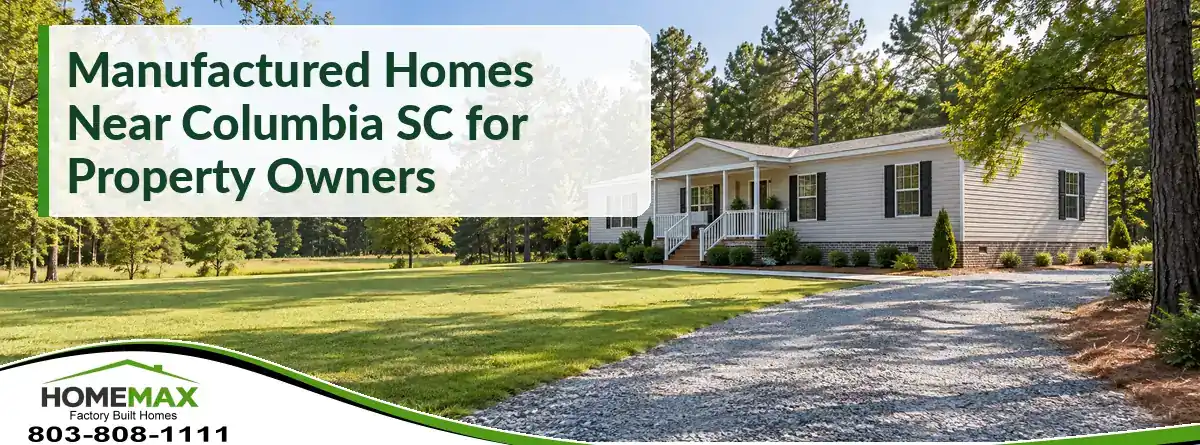
Manufactured Homes Near Columbia SC for Property Owners
Quick Answer
If you already own property near Columbia, start by confirming zoning, septic or sewer, utilities, access, setbacks, drainage, and site-prep needs before choosing a home. Then compare floor plans and financing with the property requirements in mind.
Owning the Property Changes the First Questions to Ask
If you already have property close to Columbia, South Carolina, the process of looking for a manufactured home can begin from a different point than it can for someone who is still looking for land. In this case, you can concentrate on finding a home that suits the property, but you must still carefully examine the land before deciding on a floor plan or making up your mind. Factors such as zoning regulations, access, utilities, septic or sewer arrangements, grading, setbacks, and delivery conditions may influence which home suits a given site.
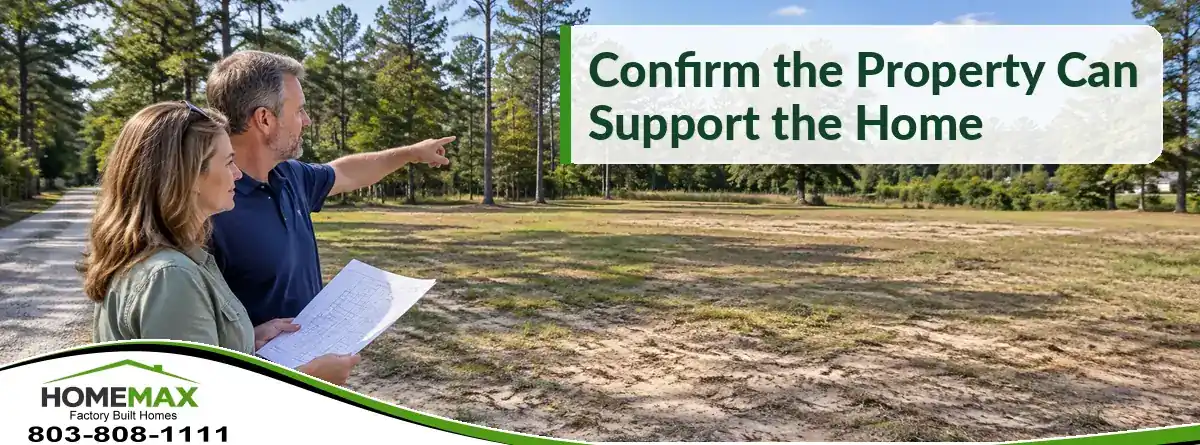
Confirm the Property Can Support the Home
First, find out what is permitted on the property and what restrictions may apply. Local zoning and land-use regulations can influence where a manufactured home can be placed, whereas deed restrictions or neighborhood covenants might impose additional rules. Also, the plot must have sufficient usable area to accommodate the house, the required setbacks, driveway access, connections for utilities, and any septic system or well that may be necessary.
HomeMax will assist you in comparing the property requirements with the available manufactured homes if you already own some land. The aim is to reduce your search to those homes which are suitable for the site, rather than selecting a home first and then realizing there is a property conflict.
Plan Utilities and Site Preparation Early
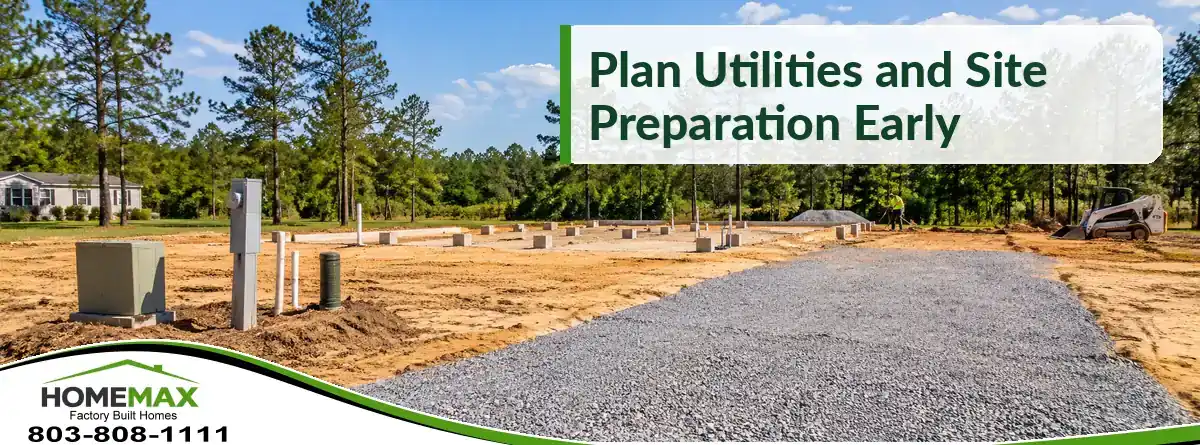
Just because you own the property doesn't mean that the site is suitable for a manufactured home; you might have to check whether public water and sewer services are available or make arrangements for a private well and septic system. In South Carolina, approval and permitting are required for septic systems in cases where a house is to be erected on land that is not connected to a public or community sewer system. Soil conditions, drainage, slope, and available space can all influence this process.
Site preparation can also include clearing, grading, driveway work, meeting foundation or support requirements, and ensuring the delivery route is suitable for the home sections being taken to the property. The HUD guidelines for the installation of manufactured homes place emphasis on site preparation, access, drainage, foundation considerations, local requirements and utility connections.
Compare Homes With the Property in Mind
When you have a better understanding of the basic property issues, you will be able to compare the floor plans more effectively. Factors such as the size of the home, its width, the number of sections, the design of the porch, the arrangement of the bedrooms, and the exterior features all affect how well the house suits the land. A house that seems perfect on paper might not actually be the best choice if the property has restricted access, odd setbacks, drainage problems, or has utilities located in areas that make placement difficult.
It is also a good opportunity to split the cost of the house from the total project budget since the expenses for site work, utilities, delivery, setup, permits, the various steps, porches, and other work related to the property can differ. Buyers who wish to talk about the land aspect of the process can look at HomeMax's land and real estate needs information before deciding on a particular home.
Keep Financing and Property Details Together
Land ownership may have an important role in the financing discussion, but the specific loan options and terms will still be determined by the buyer, the house, the property, the credit history, the income, the down payment, the lender's requirements, and the way in which the home is to be titled and installed. It is advisable to look at the manufactured home financing resources early on so that you know which questions to ask before deciding on any upgrades or setting your final budget.
Bring the Property Details to HomeMax
When you already have a property close to Columbia, gather as much information as possible at the beginning of the process of comparing houses—such as the address of the property, the survey if one is available, details about the utilities, information regarding driveway access, the septic or sewer situation, and any zoning or deed restrictions you may have. This will give you a better basis for comparing houses and for working out the remaining questions that need answering.
You can use HomeMax to look over floor plans, the features of model homes, land considerations, and financing options. Once you are ready to compare different possibilities, contact HomeMax to talk about the property and the type of manufactured home you are thinking of purchasing.
Frequently Asked Questions
Can I place any manufactured home on property I already own near Columbia, SC?
Not necessarily. Zoning, deed restrictions, setbacks, utilities, septic or sewer, site access, grading, and delivery requirements can affect what works on a specific property.
What should I check before choosing a manufactured home?
Confirm land-use rules, access, utilities, water and sewer or septic and well needs, drainage, site preparation, and available space so you can compare homes that fit the property.
Does owning land mean the site is ready for a manufactured home?
No. The site may still need approvals, grading, utility work, septic permitting, access improvements, or other preparation depending on the property and local requirements.
Can HomeMax help me compare homes for property I already own?
HomeMax can help you compare floor plans, model-home features, land considerations, and financing resources. Property-specific approvals and suitability should be confirmed with the appropriate local authorities and professionals.